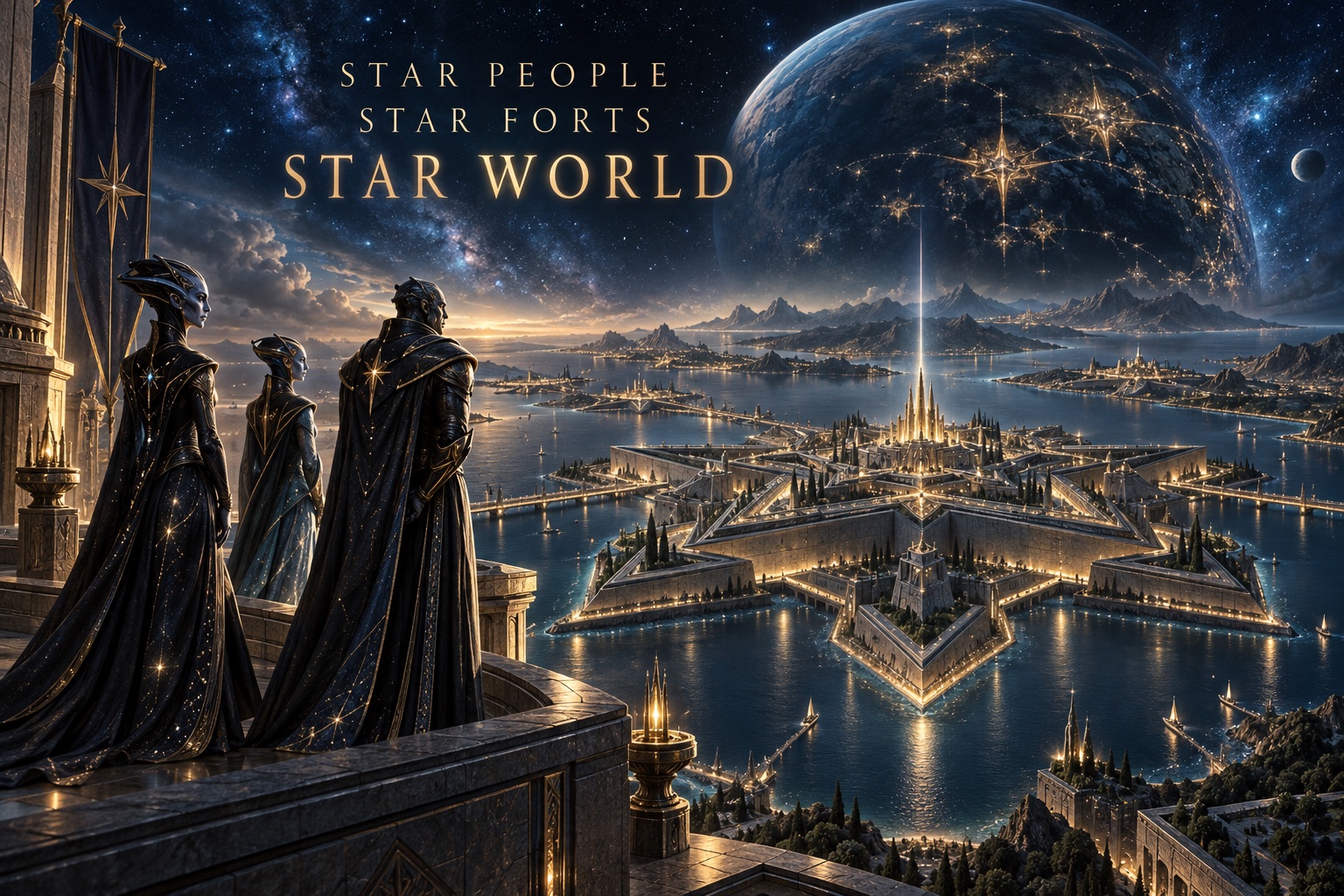
THE FIRST RECORD
The Arrival
Mara was repairing her grandmother’s book about rain when she found the falling ships.
She was twenty-three, the youngest archivist at the last working observatory. Salt blew through its cracked dome and settled on everything, even inside closed drawers. Below, the sea filled the old fort’s pointed channels. Her brother, Tomas, was lighting the bakery ovens in a room the oldest maps called the eastern workshop.
He had come upstairs earlier with a pear from the orchard. While she ate it, he described the roof he meant to put on his unfinished house. There would be a little room facing the water, if she wanted it. Mara said she would help measure the beams tomorrow. He asked her to come down before the bread was ready. She promised to try.
The rain book had belonged to their grandmother for most of her life. Between descriptions of cloud shapes, she had recorded leaking gutters, flooded cellars, the year the orchard flowered twice. She had died the previous autumn, leaving six repair notebooks and a receiver that still refused to work. Mara had found it easier to mend the book.
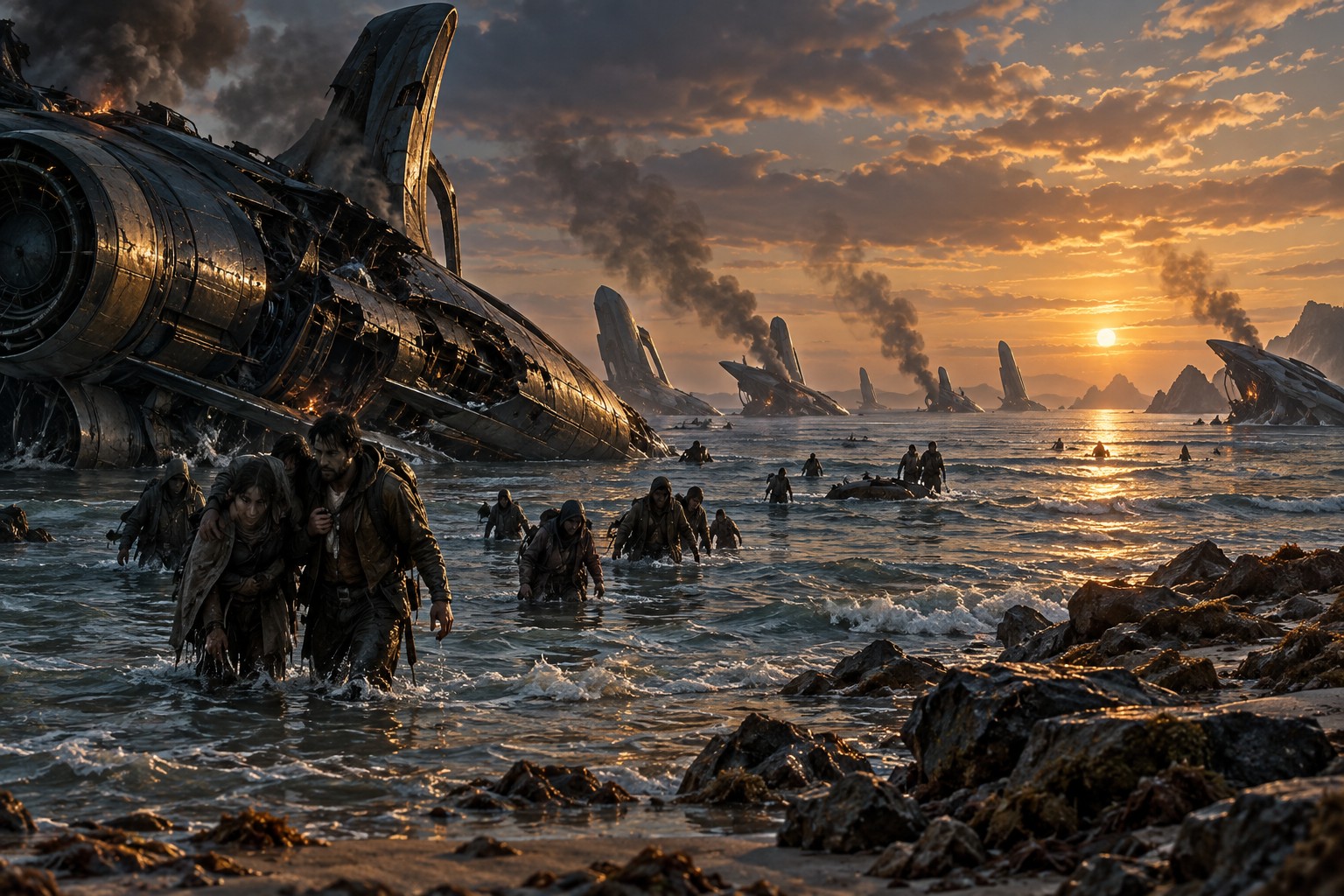
A strip of paper came loose from the binding. On its hidden side, seven ships descended through smoke. One had lost its stern. Small marks below the hulls resolved, under her lens, into people. She knew the official account. Now she could see a hand trembling as it drew.
A ledger number led her to a box of expedition papers. The first account began with an engineer named Iven climbing out through a window because the ship’s doors had twisted shut. The water reached his chest. Behind him, someone passed a child through the broken frame, wrapped in a navigation officer’s coat.
Her name was Neri. She kept asking where the shore was. Iven could not see it through the steam, so he told her to hold the collar tight and followed the people carrying a lamp. The fleet had reached Earth with three engines dead and the others burning themselves apart. Their commander had chosen the shallow seas because the damaged ships could no longer land on solid ground.
By dusk, blankets lay along a strip of sand. They counted the living, carried out the wounded, and waited for the engineers. Iven sat beside Neri while she picked black grains from her sleeve. He could name every broken part. He could calculate every repair. But the alloys, the crystal chambers, the machines that made them—none existed here.
Beside the drawing, someone had written: We have landed. We have not arrived. Mara moved the lamp closer. She wished, suddenly and fiercely, that she could show her grandmother.
A MACHINE TO MAKE A MACHINE
The Knowledge
They Carried
The next document was a list: mines, furnaces, waterwheels, schools. Mara recognized the names of places now buried under streets. Someone had crossed out a proposed departure date and written another below it. There were no more dates after the third.
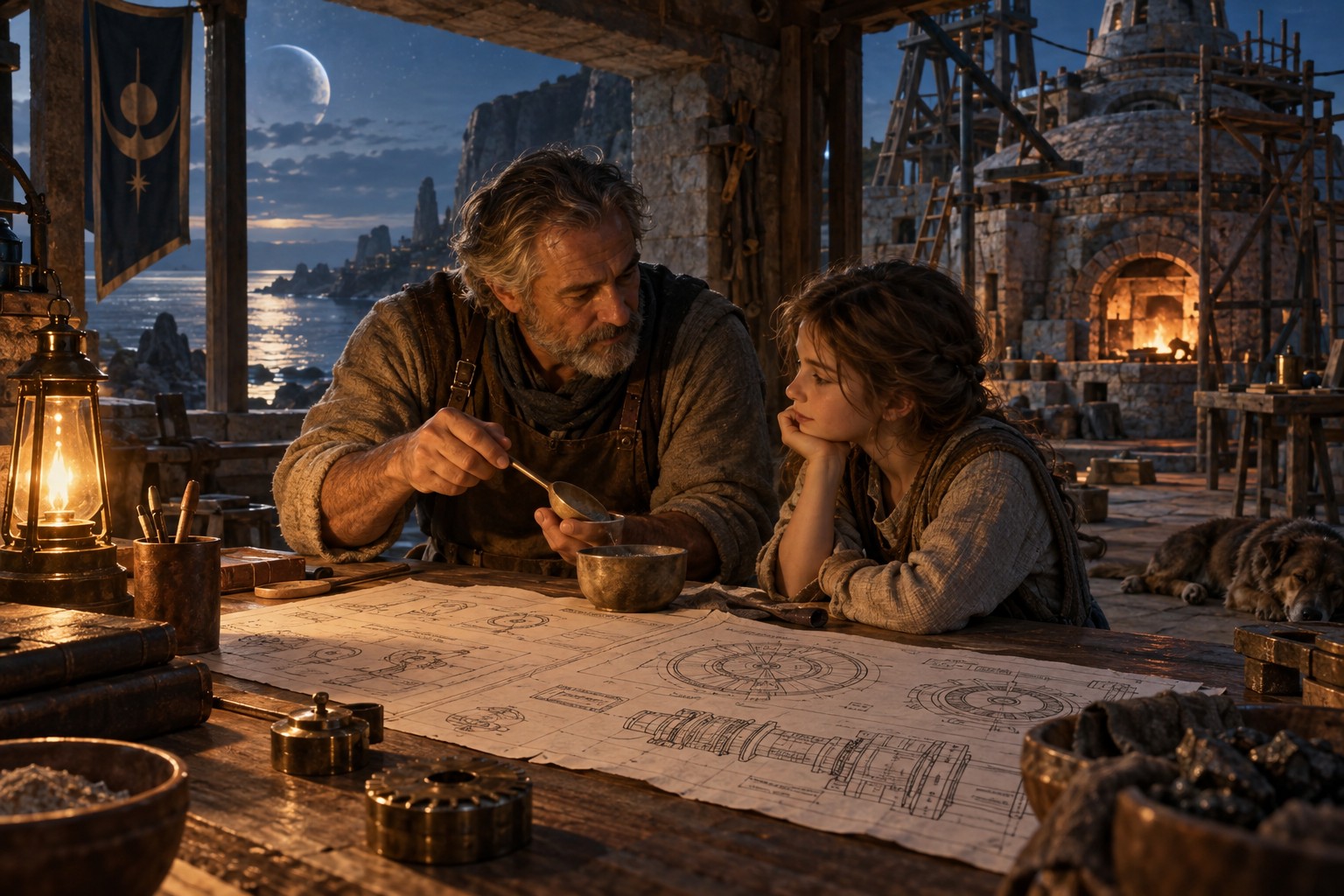
During the first winter, Iven spread a star engine’s design across a kitchen table. By then the kitchen had a roof, although the door was still a sheet from the ship’s infirmary. Neri sat opposite him, turning a spoon between her fingers. She asked why they were building another furnace when the ships already had engines.
He took the spoon and laid it on the drawing. “The damaged chambers need new linings. To make those, we need a tool that can cut finer than a hair.”
“Then make it.”
“We need harder metal.” He placed a cup beside the spoon. “For that, a hotter furnace. For the furnace, more power. For the power, machines we haven’t built.” Soon every object on the table belonged to the engine. The child’s bowl stood for a mine beyond the mountains. Their supper waited in the pot until someone complained.
The ships had brought tools and spare parts, enough for the journey they had expected. Those tools could keep people alive. They could not reproduce the factories that had made them. A worn cutting tip might require the work of a dozen trades, and each trade needed equipment of its own. They had carried the knowledge across the stars. They had not carried the world that made the knowledge useful.
In spring, Iven took Neri to see the waterwheel. Its axle had cracked twice. The third time, the carpenters used timber from farther inland and changed the way its weight rested on the supports. When the wheel finally turned, nobody cheered until it had made a full circle. Then Neri ran beside the channel, keeping pace with its shadow.
The first furnace spoiled most of its metal. The second produced tools that held their edges. By the time Neri was old enough to teach apprentices, she could make a bearing Iven had once kept wrapped in cloth because it was the last of its kind. She placed the new one beside it. His account gave its dimensions, its weight, and then a sentence squeezed between the lines: She would not let me thank her until we had tried it.
Mara turned the page. Iven’s handwriting stopped. Neri’s continued, followed by another hand. They had begun to count progress in things a child could learn to make.
ONE PATTERN, A THOUSAND SHORES
The Star Forts
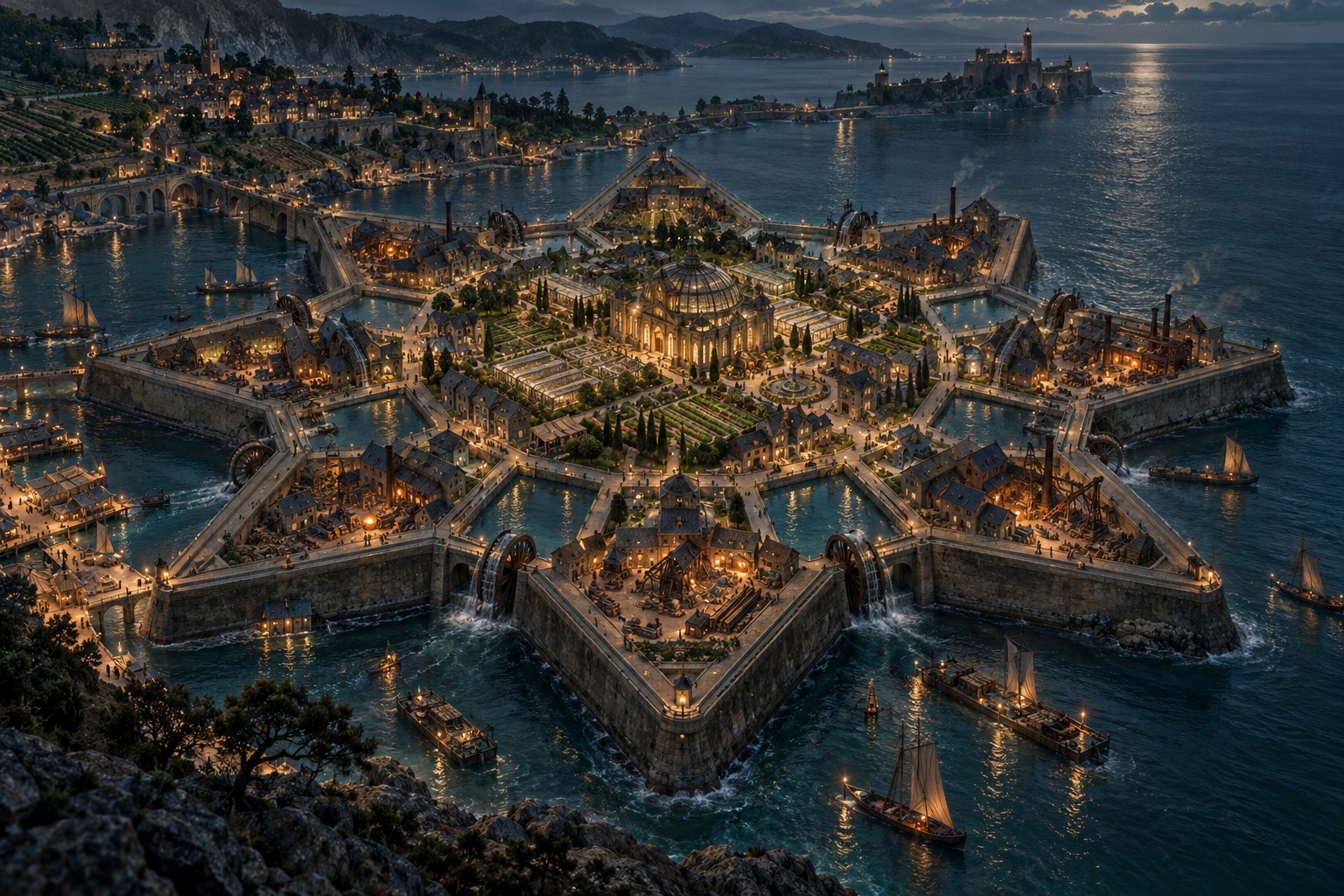
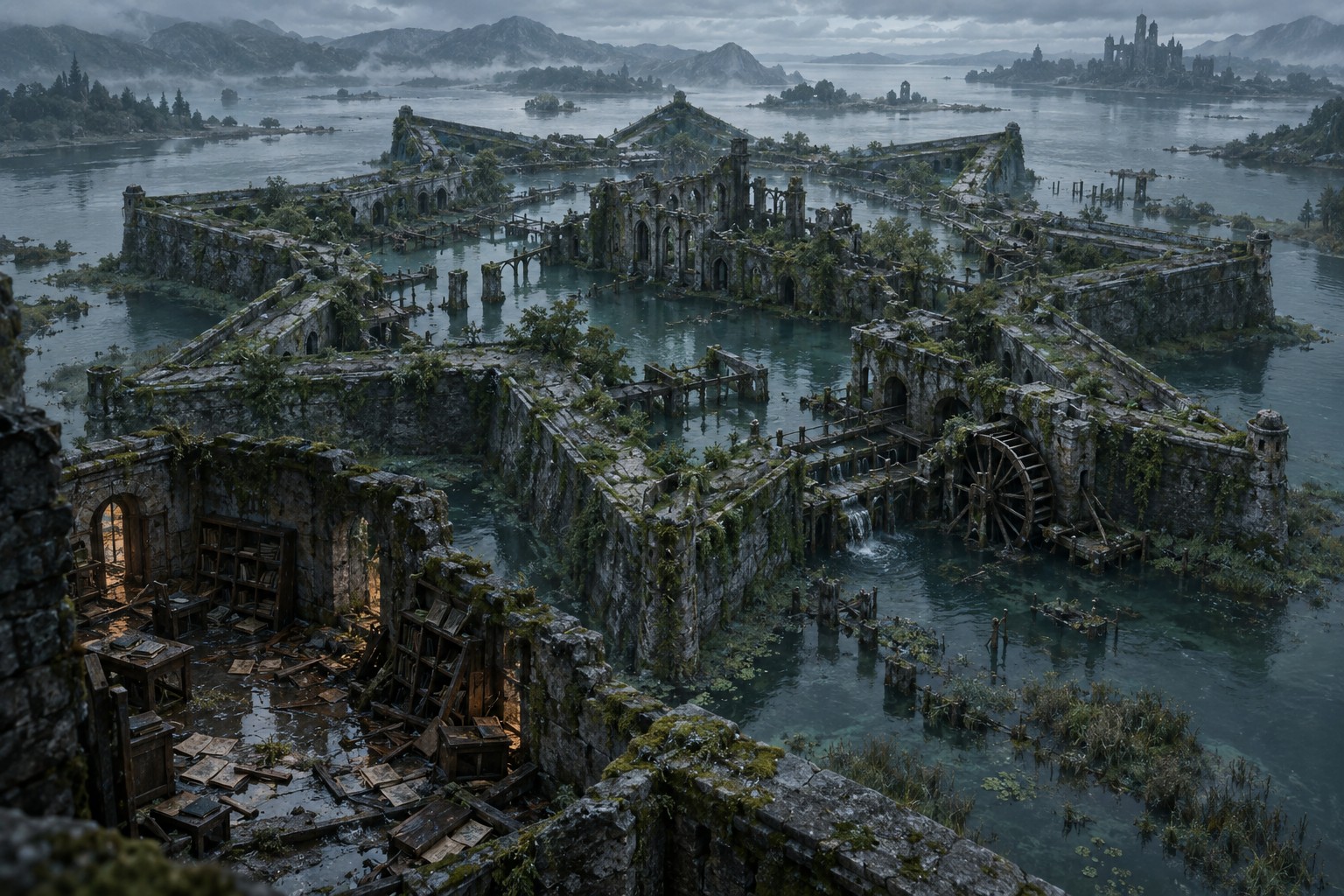
At the bottom of the box lay a folded plan. Mara spread it across the floor and recognized the shape beneath her feet: eight points, a sheltered center, water running between the outer walls. A stain covered the eastern arm. She steadied the curling edge with her grandmother’s rain book.
It was the expedition’s standard settlement, copied from their homeworld. The angled arms separated dangerous workshops from houses and growing beds. A furnace fire could be contained before it reached the grain stores. Water cooled the machinery, turned wheels, and carried supplies. In the sheltered center, above the flood line, stood a dry archive where every essential drawing had a second copy.
As the survivors’ descendants crossed oceans and settled new shores, the plan went with them. It could be enlarged or turned to meet a river, but the working measurements stayed the same. Builders on opposite sides of Earth could follow the same instructions, fit the same tools, and send a replacement part without seeing the machine it belonged to.
One fort refined metals. Another gathered power from tides. A third ground lenses and cut precision tools. Mara’s watched the sky and kept the clocks. Between them traveled barges of grain, apprentices, copper wire, and copied books. Each settlement was one piece of an unfinished shipyard; none could finish the work alone.
The shared blueprint
Select a station to uncover its purpose.
Materials
Ore became purified metal in the outer workshops. Each harder alloy brought the next generation of tools within reach.
A letter pinned to the plan described a shipment of spindle bearings that had arrived after two years at sea. The receiving engineer had expected to spend weeks adjusting them. Instead, the first bearing slipped into place beneath his thumb. He wrote that the distant makers should be told. On the back, in a different hand, someone had noted that their youngest apprentice was responsible.
Mara knew those walls as pictures in schoolbooks: one standing in snow, another half swallowed by trees, a third surrounded by a city whose language she could not read. She had never imagined a girl at a workbench in one of them, waiting two years to learn whether she had measured correctly.
She traced the eastern arm with her finger. The old supply route passed through Tomas’s bakery. Above it were the rooms where children had slept while their parents rebuilt a ladder to the stars. Even the wide oven recess had been inherited from a workshop hearth.
Along the plan’s margin, she found the observatory’s first receiver circuit. Two pins were joined by a small hinged contact. In the later manual on her desk, that fine line was missing. Mara fetched her grandmother’s last notebook and found the unfinished entry she remembered: Current reaches the lower housing. Find the first drawing.
She carried both pages upstairs. Beneath the receiver’s glass, the two pins stood apart.
WHAT THE WALLS REMEMBERED
The Long Forgetting
The repair cupboards smelled of dust and oil. Mara searched them for a metal that would carry the current without quickly corroding. In the fourth cupboard she found a narrow box marked in her grandmother’s handwriting. Inside were repair receipts, a folded ribbon, and an account of the western fort.
Its decline had begun with a flood. Water took the lower archive and ruined the grain stored beside it. The next winter, the last supply boat failed to arrive. A neighboring fort sent food but could spare no timber for the damaged docks. Its own mills were waiting for tools the western workshops no longer made.
The town council’s records survived in copies. At one meeting, a furnace builder asked for the remaining iron and six months of labor. A larger furnace, she said, would produce the tools to restore the docks. Then the shipments could resume, and their children would have another chance to leave Earth.
A physician put a basin on the council table. The hospital roof leaked into the beds, and she had carried that basin between three feverish children the night before. She wanted the iron for pumps and the labor for a new ward. The furnace builder asked how they would replace the pumps when those broke. The physician asked which child should wait.
They argued until the lamps burned low. In the margin, the clerk recorded their decision to divide the workers. The ward opened late. The furnace was never finished. Years afterward, people called the two sides returners and gardeners, as though every person had wanted only one thing. Mara noticed the furnace builder’s name again on a list of volunteers repairing the hospital roof.
Elsewhere, routes closed for quieter reasons. A harbor filled with silt. A shipwright died without an apprentice. Two settlements disputed the price of grain until neither could afford the voyage. Copies remained in distant archives, but knowing a book existed was little help when no one could reach it. Within a few generations, some workshops had no one left who could read their labels.
Languages changed. A measurement became a prayer; a maintenance bell became a call to worship. Later kingdoms raised gun platforms over workshops and made barracks from classrooms. They repaired what they needed. They forgot what they could no longer use. The walls survived because people kept finding reasons to live inside them.
TRACES OF A SHARED WORLD
The walls remained.
Tools, power, and knowledge moved between the forts. Each settlement could make something the others needed.
Mara had grown up thinking the channel outside her window was only a moat. She sat with the papers on her knees, listening to water pass beneath the floor. Then she lifted the ribbon. Underneath lay her grandmother’s broken silver clasp, wrapped in a scrap labeled Good metal. Keep. Mara held it against the circuit.
For a moment she imagined filing away the small scratches her grandmother’s fingers had made. Then she remembered being scolded for leaving the good scissors in a drawer because they were good. She unwound the thread caught in the hinge and laid it with the ribbon. From below came the smell of bread.
AFTER ALL THIS SILENCE
The Signal
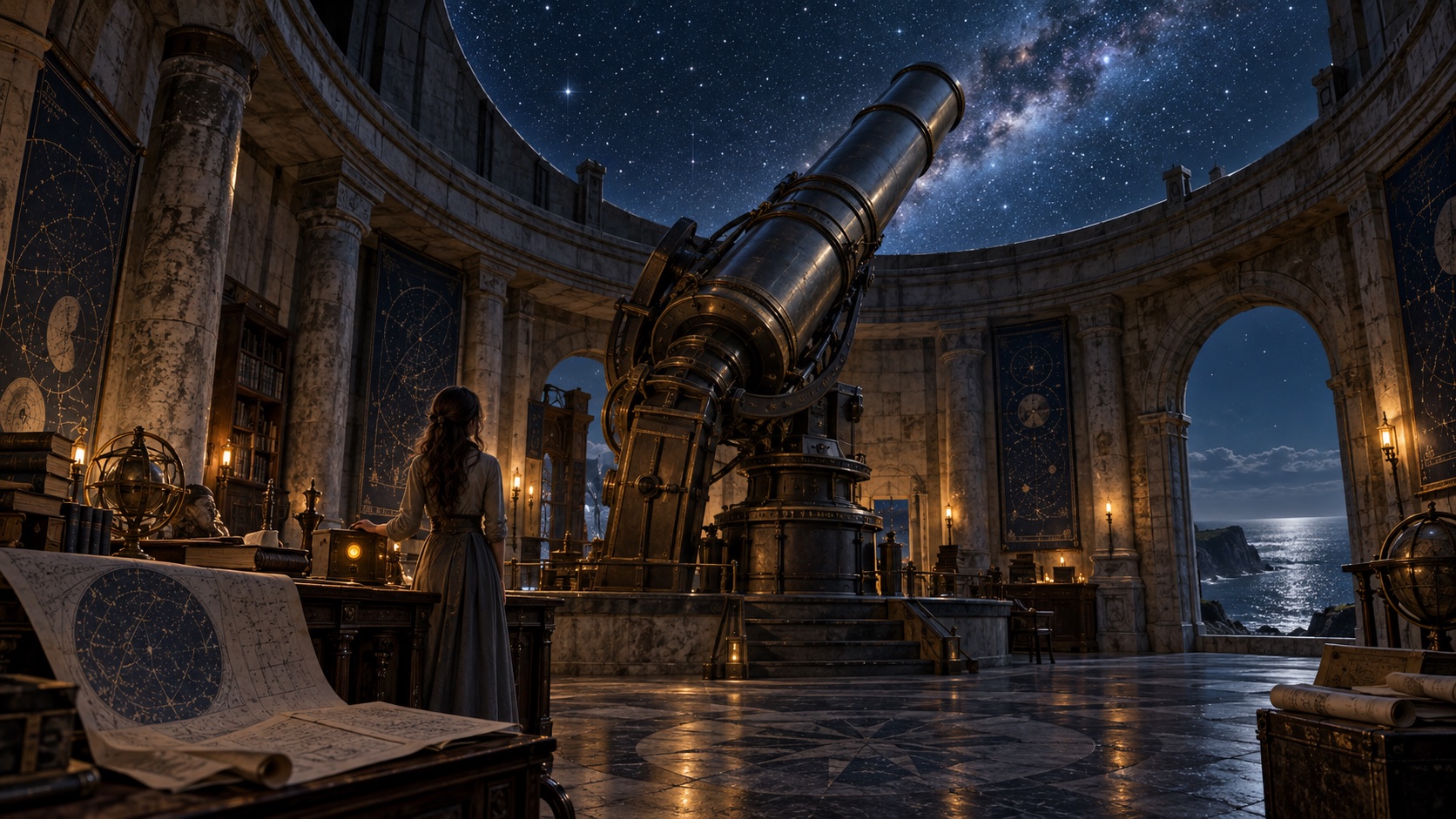
She filed the clasp until dawn. Silver dust gathered on the dark cloth beneath her hands. Twice she stopped to compare the new contact with the drawing; once she almost snapped it by bending too far. Her grandmother’s notebook lay open beside her. The older woman had already marked the safe order for reconnecting the power.
Mara fitted the silver between the blackened pins, fastened its hinge, and turned the receiver’s handle. The handle drove a small generator. She knew its resistance from a hundred evenings spent coaxing nothing from the machine.
Nothing.
She let go. Through the dome, the last bright star was fading. Downstairs, a tray struck stone. Tomas would be coming up soon, and she would have to explain why she had missed another night’s sleep.
Then she saw the contact lift a little as the handle settled. She tightened one screw and tried again.
A click. A low hum, felt through the table before she heard it. Then three notes.
Mara stopped breathing. The notes were printed above the circuit: the expedition fleet’s original call sign, followed by its identifying number. The same number now glowed beneath the glass. She looked from the paper to the receiver until she could make herself believe they matched.
She pulled the chair closer. Its scrape was shockingly loud. Letters appeared, paused, then settled into the archive’s oldest language. One verb could mean to discover or to recover. She checked its use in the expedition account. She translated the sentence twice. A third time aloud.
Examine the call sign
THREE NOTES. THE SAME INTERVALS.
The intervals match the notation above the circuit. For Mara, those three familiar notes turn a light on a machine into a voice from somewhere else.
Tomas stood in the doorway with two cups. He saw her face and put them on the floor. She pointed to her translation. He read it, then looked up through the broken dome, as though someone might be standing there.
“Is it old?” he asked. “Something we sent ourselves?”
Mara checked the indicator her grandmother had labeled. Incoming. There was no date she could recognize, no name beyond the call sign. “I don’t know how long it’s been traveling.” She touched the edge of the glass. “But it came from outside.”
For a long time there was only the sea, moving through the channels their ancestors had made. Tomas sat beside her. She took his hand. Hers was shaking. The receiver kept its small light, and neither of them reached for the transmitter. She had wanted to hear something all her life. She had never rehearsed an answer.
A DIFFERENT KIND OF RETURN
The World
They Chose
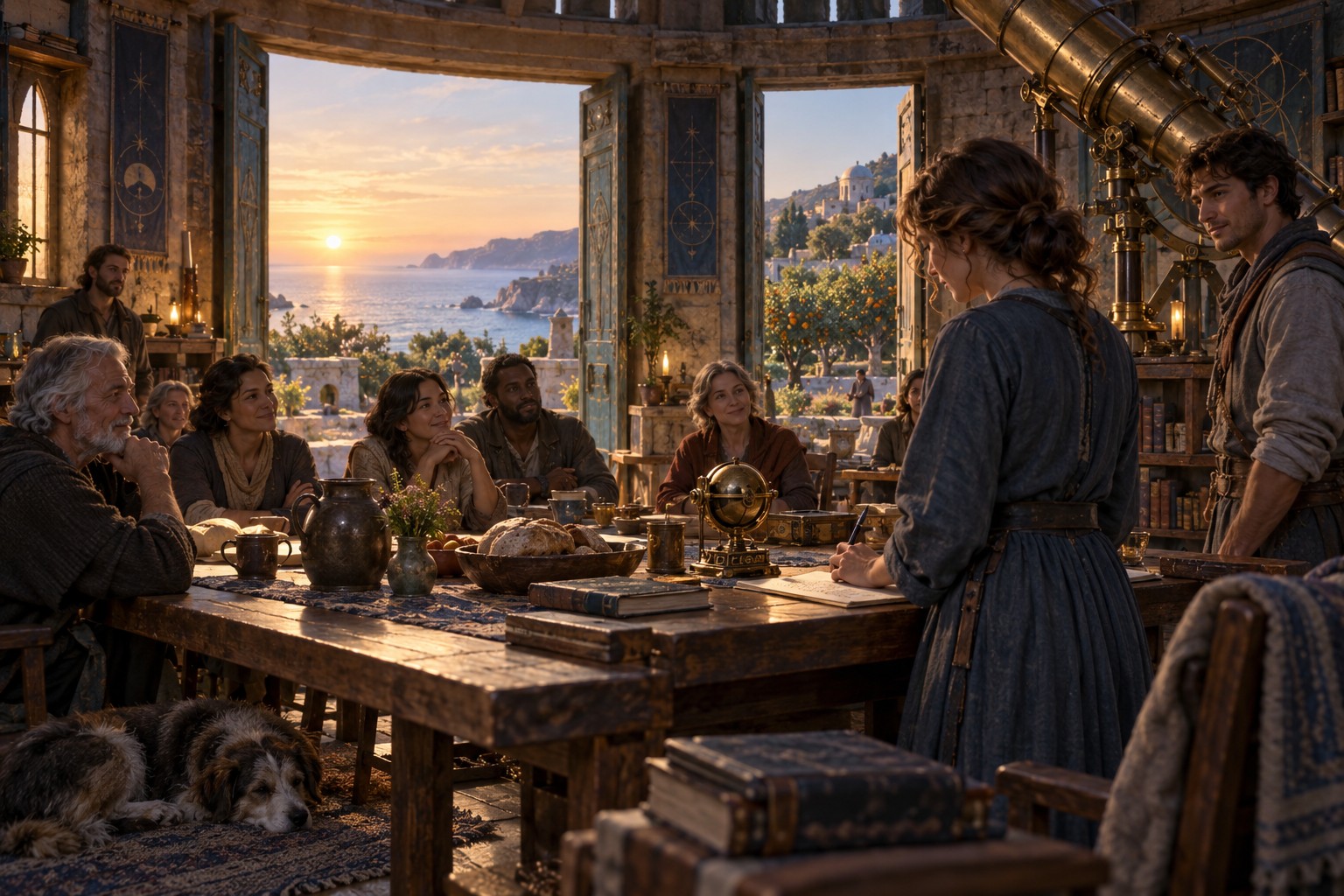
Tomas went downstairs when the first customers knocked. By midmorning, people filled the observatory stairs. They arrived carrying work they had forgotten to put down: a half-mended net, a school register, a boot without its lace. A teacher asked whether rescue meant ships. A boatbuilder asked whether anyone would have to go. Mara told them everything she knew, which took less than a minute.
The teacher wanted to show her pupils the light. An old mechanic asked to see the repair before he would discuss the message. A woman near the door said her daughter lived across the sea and must hear about this before an answer was sent. Someone offered a boat. Someone else began listing the forts that still kept an archive.
Mara found Tomas on the balcony, looking toward the orchard. The roof beams he had described were stacked beneath a sheet between the trees. She said she still meant to help him measure them. He smiled, but he did not tell her that was what he had been thinking about.
“Would you go?” he asked.
She wanted to see a living star engine. She wanted, so badly it hurt, to stand beneath a sun her ancestors had known. Until that morning, she had also expected to grow old within walking distance of her brother’s house. She could imagine each life clearly. What she could not imagine was choosing one and losing the other.
“I’d want to see what they meant by home,” she said. “Would you?” Tomas watched a bird settle on the unfinished roof. “I know what I mean by it.” After a moment he added, “That doesn’t mean you have to stay.”
Below them, children jumped across the cooling channel. They called it Dragon Water. That name had never appeared on any plan. Mara watched the smallest child take a running start and stop at the edge. An older girl went back to hold his hand. Together they jumped.
Inside, the neighbors were still talking. Mara laid a clean sheet beside the receiver. One question from the dark deserved more than one person’s answer. They would send copies to the other settlements, collect translations, ask what people hoped for and what they feared. Wanting to be found was not the same as agreeing to leave.
Under the old commander’s number, she opened a new entry: The people of Earth. Tomas brought a longer table. Someone carried up bread. Mara listened, her grandmother’s silver holding the circuit closed. Beyond the open doors lay the sea, the fields, and the road to her grandmother’s grave.
The stars had been their ancestors’ home.
Earth was theirs.
THE END